Most SEO campaigns fail before they start. Not because of algorithms or competition, but because the first steps are wrong.
If I take over a website, the first 30 days are not about chasing rankings. They are about removing friction, identifying opportunities, and building a system that compounds over time.
Here is exactly how I approach it.
Week 1: Full Audit and Reality Check
Before making any changes, I need to understand what is actually happening.
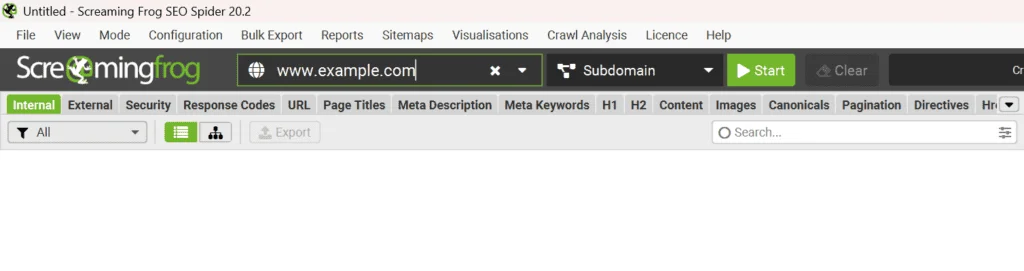
1. Technical audit
I start by identifying issues that block performance:
- Indexing problems
- Crawl errors
- Broken internal links
- Duplicate content
- Core Web Vitals issues
- Poor site structure
If search engines cannot crawl or trust the site, nothing else matters.
2. Analytics and tracking review
Most businesses are working with unreliable data. I check:
- Google Analytics setup
- Conversion tracking accuracy
- Search Console coverage and queries
- Attribution gaps
If the data is wrong, every decision that follows will be wrong.
3. Keyword and intent mapping
I do not chase high-volume keywords. I map:
- What the business actually sells
- What users are searching for at each stage
- Where the current site fails to match intent
This highlights gaps that competitors are already exploiting.
Week 2: Fix the foundations
Now that the issues are clear, I fix what is holding the site back.
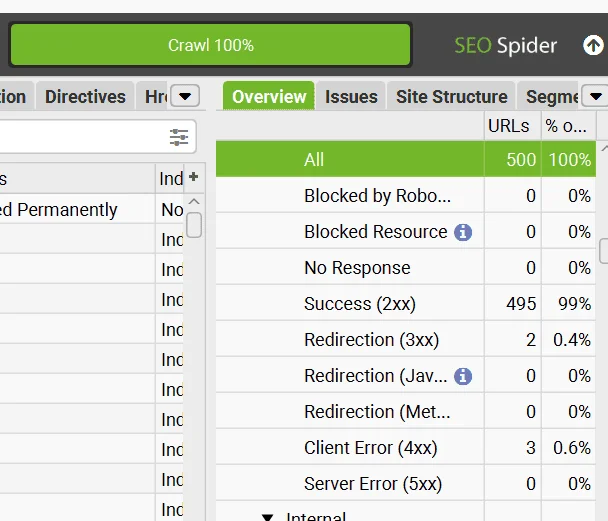
1. Technical fixes
Priority fixes include:
- Resolving indexing issues
- Improving site speed
- Cleaning up crawl paths
- Fixing redirects and canonical errors
These are often quick wins with immediate impact.
2. Site structure optimisation
Most sites are poorly organised. I restructure:
- Clear category hierarchy
- Logical internal linking
- Reduced click depth to key pages
This helps both users and search engines navigate efficiently.
3. On-page SEO corrections
I refine:
- Title tags and meta descriptions
- Heading structure
- Content relevance to search intent
This is not about keyword stuffing. It is about clarity and alignment.
Week 3: Content that actually drives traffic
Once the foundation is stable, I focus on content that performs.
1. Identify high-impact opportunities
I prioritise:
- Keywords with commercial intent
- Pages already ranking on page 2 or 3
- Competitor gaps
These deliver the fastest return.
2. Upgrade existing content
It is faster to improve than to create from scratch:
- Expand thin content
- Align with user intent
- Add internal links
- Improve readability and structure
This often leads to ranking improvements within weeks.
3. Create strategic content
New content is created only where it matters:
- Service pages that convert
- Supporting blog content that builds authority
- Content clusters that reinforce topical relevance
Every page must have a clear purpose.
Week 4: Authority and scaling
With the site stable and content aligned, I start building authority.
1. Internal linking strategy
Internal links are one of the most underused assets:
- Pass authority to key pages
- Reinforce topic clusters
- Improve crawl efficiency
This alone can shift rankings significantly.
2. Link building foundations
I do not chase spammy backlinks. I focus on:
- Relevant industry links
- Digital PR opportunities
- Partnerships and mentions
Quality always beats quantity.
3. Performance review and adjustments
By the end of 30 days, I review:
- Ranking movement
- Traffic changes
- Conversion data
Then I adjust the strategy based on real performance, not assumptions.
What most businesses get wrong
Most SEO efforts fail because:
- They skip technical fixes
- They target the wrong keywords
- They produce content with no strategy
- They ignore data quality
SEO is not about doing more. It is about doing the right things in the right order.
The outcome after 30 days
You should not expect domination in 30 days. That is unrealistic.
What you should see:
- A technically sound website
- Clear keyword targeting
- Improved rankings for key pages
- A roadmap for scalable growth
That is how long-term SEO success is built.
Final thought
If the first 30 days are done correctly, everything that follows becomes easier, faster, and more predictable.
If they are done poorly, you will spend months fixing mistakes. That is the difference between SEO that works and SEO that wastes time.

Graig Upton
Graig Upton is a UK SEO and Google Ads consultant with 23 years of hands-on digital marketing experience. Google certified in Ads, Analytics and Conversions, he has helped businesses ranging from local providers to national brands - including Nando's and Financial Times - dominate search and scale their leads. Based in Preston, working with clients across the UK.