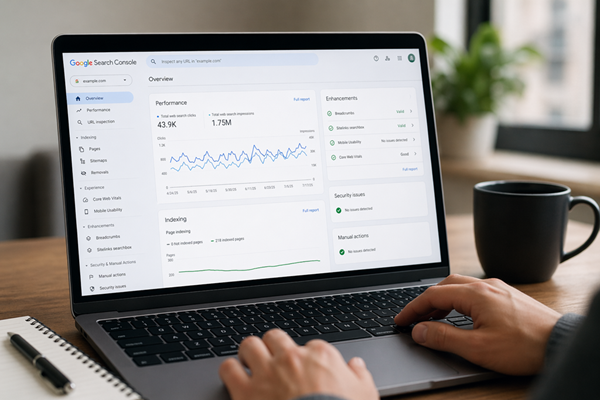
As an SEO consultant, I rely on data that reflects how a website performs in real search environments. There are plenty of tools that estimate traffic, rankings, and visibility, but very few provide direct insight from the search engine itself. That is where Google Search Console stands apart.
It is not just another reporting platform. It is a diagnostic tool, a performance tracker, and a direct line into how Google views a site. When used properly, it removes guesswork and replaces it with evidence.
Clear visibility of search performance
The Performance report is the foundation of meaningful SEO work. It shows exactly which queries bring impressions and clicks, along with average positions and click-through rates.
This allows me to:
- Identify keywords that are close to page one and worth pushing further
- Spot pages with high impressions but low click-through rates
- Understand how search intent aligns with existing content
Instead of relying on assumptions, I can see how real users interact with listings in search results.
Indexing insights you cannot get elsewhere
A website ranking poorly often has little to do with content quality and more to do with indexing problems. Google Search Console provides a clear view of what has been indexed and what has not.
The Indexing reports highlight:
- Pages excluded from the index and why
- Crawled but not indexed URLs
- Duplicate content signals
- Canonicalisation issues
This is critical. If a page is not indexed, it will not rank, no matter how well it is optimised.
Improving crawl efficiency with sitemaps
Submitting XML sitemaps through Search Console ensures that important pages are discovered and prioritised. It also provides feedback on errors, allowing me to correct issues that may prevent proper crawling.
URL inspection tool
The URL Inspection tool provides page-level insight that is invaluable during audits and fixes. It allows me to check how Google crawls a specific page, confirm whether it is indexed, and request reindexing after updates. This removes delays and gives immediate feedback when changes are made.
Technical SEO made practical
Technical SEO can easily become abstract without proper tools. Google Search Console makes it tangible by surfacing real issues affecting a site.
Key areas include:
- Core Web Vitals and page experience signals
- Mobile usability issues
- HTTPS status
- Crawl errors and server responses
Rather than auditing in isolation, I can prioritise fixes based on what Google is actively flagging.
Manual actions & security issues
Search Console also alerts me to manual actions and security issues. Whether it is a penalty or a hacked site warning, these alerts allow immediate action before rankings are significantly affected.
Why it matters:
Critical for identifying penalties or security problems that can destroy visibility overnight.
Rich results & enhancements reports
Enhancement reports provide insight into structured data performance, including rich results eligibility. This helps ensure that pages are not only indexed but also enhanced visually within search results.
Why it matters:
These reports help optimise structured data and improve SERP appearance.
Understanding search intent at scale
One of the most valuable aspects of the tool is how it reveals the language people actually use. Keyword research tools provide estimates, but Search Console shows real queries.
This helps refine:
- Content structure
- Heading strategies
- Internal linking
- Topic depth
It ensures that content aligns with how users search, not how marketers assume they search.
Link insights direct from Google
Search Console provides first-party link data directly from Google, which is often more reliable than third-party tools.
The Links report highlights both external backlinks and internal linking structure. This helps identify which pages carry authority and where internal links can be strengthened to support rankings.
Monitoring changes and measuring impact
SEO work requires constant testing and refinement. Whether I update content, improve internal links, or fix technical issues, I need to measure the impact.
Search Console allows me to:
- Compare performance across date ranges
- Track improvements in rankings and clicks
- Identify sudden drops and investigate causes quickly
This feedback loop is essential for on-going optimisation.
Supporting long-term SEO strategy
Short-term gains matter, but sustainable SEO requires consistency. Google Search Console provides the data needed to build and refine a long-term strategy.
It helps answer key questions:
- Which pages consistently perform well?
- Where are growth opportunities?
- What content needs improvement or consolidation?
With this insight, decisions are based on evidence rather than opinion.
Final thoughts
Google Search Console is not optional for serious SEO work. It provides clarity where other tools provide estimates. It highlights problems before they escalate. Most importantly, it shows how Google actually interacts with a site. For an SEO consultant, that level of insight is not just useful. It is essential.